
SERVICE AREA
All Of Canberra

0431 262 273

Dark rear windows can make a car look as though it has already been tinted, but appearance alone cannot reveal whether the colour comes from the glass itself or an applied film. This distinction matters when deciding whether additional tinting will improve comfort, privacy or solar performance without making the windows too dark.
For Canberra drivers, factory privacy glass may already provide some of the benefits they want, while others may benefit from a selected window film. Prime Tinting can assess the existing glazing and identify suitable options based on the vehicle, driving conditions and intended results. Knowing what is already fitted makes it easier to choose an upgrade that delivers practical value.
Factory-darkened glass and aftermarket film can look similar from outside the vehicle. Some cars also have both, particularly if a previous owner added film after the vehicle was purchased.
Before comparing tinting options, establish what is fitted to each window. This helps determine if additional film is appropriate and if any existing material needs to be removed or replaced.
Factory privacy glass typically gets its darker appearance from colour incorporated into the glass during manufacturing. It is commonly found on rear side windows and rear windscreens, while the front side windows may be noticeably lighter. The exact arrangement depends on the vehicle's specifications.
Aftermarket window film is a separate layer applied to the glass surface, usually on the inside. Depending on the product, it can change visible light transmission, solar heat rejection, UV filtering and the window’s appearance.
This is the main distinction between factory glass and aftermarket tint: one is a characteristic of the glazing itself, while the other is an applied material. Neither automatically determines the window's overall performance.
A previous owner may have added film to factory-darkened rear windows, tinted only the front windows or replaced an older film. Similar shades across the vehicle do not prove that every window has the same treatment, and colour differences do not necessarily indicate poor installation.
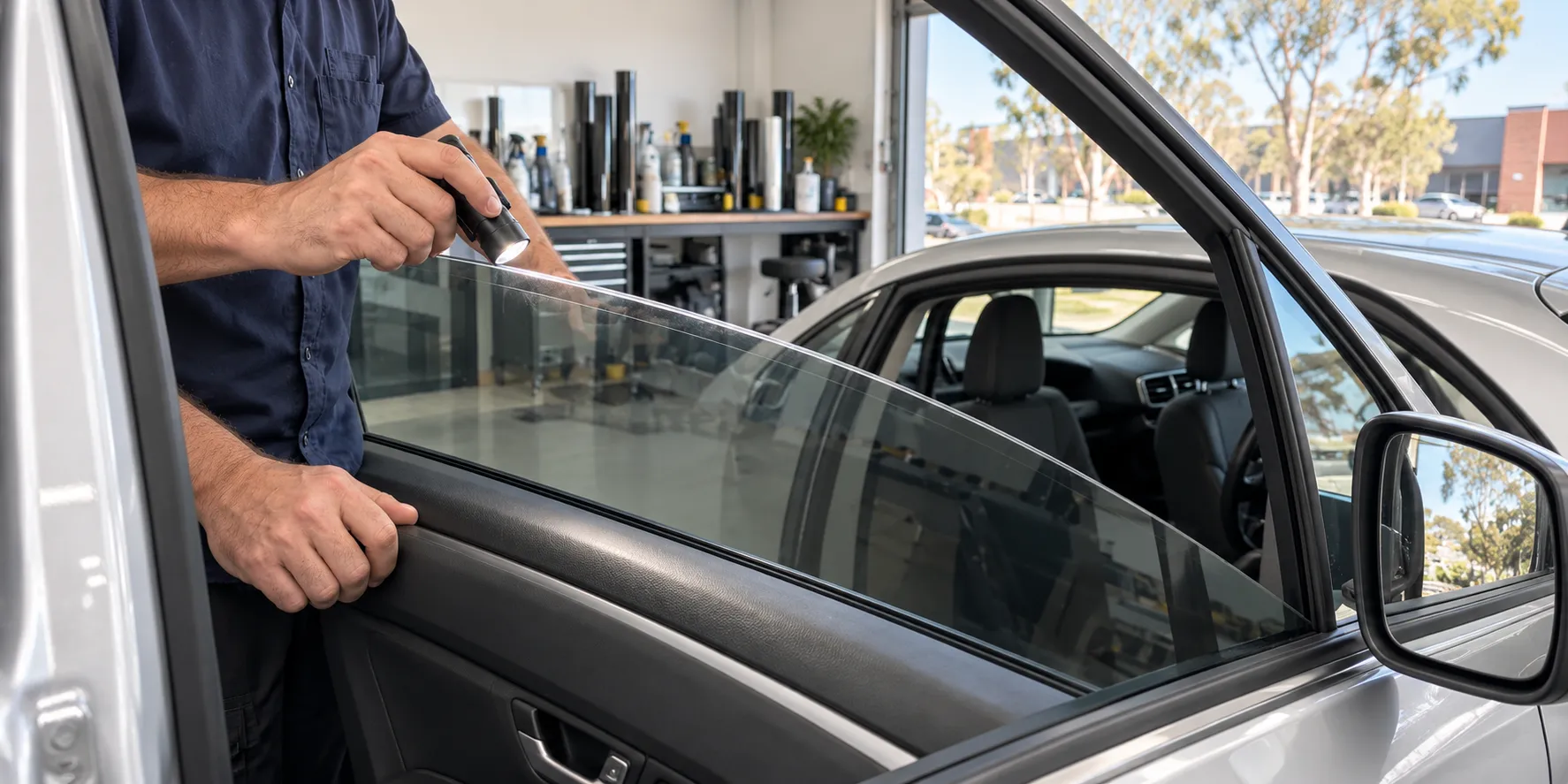
Vehicle documentation, purchase paperwork and previous tinting invoices can identify the original glazing and any aftermarket work. However, specifications should match the vehicle and variant rather than a similar model.
Records may not include modifications made after delivery. If the vehicle's history is incomplete, a professional inspection is a more reliable starting point than guessing from appearance.
Avoid scraping the glass, peeling back film or removing trim to investigate. These actions can damage the finish without providing a reliable answer. An installer can inspect the windows, assess any existing film and determine whether further testing is needed.
When comparing providers for car tinting in Canberra, ask whether the assessment includes the relevant windows, existing film condition and visible light transmission. A clear quote should explain whether the work involves bare factory glass, an existing film layer or removal of old film before replacement.
Privacy, visible light transmission, solar heat rejection and UV protection describe different aspects of window performance. A dark window may provide the desired appearance and privacy without necessarily offering the best available solar performance.
Factory glazing also varies between vehicles and between windows on the same vehicle. The most useful approach is to identify what the existing glass already provides, then select an upgrade that addresses a specific shortcoming.
Visible light transmission (VLT) measures the proportion of visible light that passes through a window. A lower VLT produces a darker appearance, while a higher VLT allows more visible light through.
However, VLT does not measure how effectively a window manages solar heat. Two windows with similar visible darkness can have different solar performance because their glass and film compositions differ.
Total solar energy rejected (TSER) is one useful measure when comparing how glazing and film combinations manage incoming solar energy. Higher rejection indicates that less total solar energy passes through the tested system. Results should be interpreted in the context of the glazing used for the test, as figures for a film applied to clear glass may not represent its performance over factory privacy glass.
Infrared rejection is another figure commonly used in tinting product descriptions. It relates to a part of the solar spectrum and should not be treated as interchangeable with TSER. Ask the installer which wavelengths and test methods the advertised figures cover, rather than relying on a single impressive percentage.
The discussion of how newer window film technologies affect performance provides further background on film selection. For a specific vehicle, the key question is whether the proposed product offers a meaningful improvement over the existing glazing.
It also helps to identify the source of discomfort. Direct sunlight on a passenger's skin, glare while driving and a hot cabin after the car has been parked are different concerns. Suitable film may help manage solar energy or glare, but it cannot eliminate every source of cabin heat or replace air conditioning.
The darkness of a window does not reliably indicate its UV protection. Factory glass may already filter a substantial amount of ultraviolet radiation, but the level depends on the glazing used. Performance can also differ between windows on the same vehicle.
ARPANSA’s guidance on UV protection through vehicle glass and window films explains how protection varies between glazing types and why even a clear film can filter UV radiation.
It is therefore inaccurate to assume that all factory privacy glass provides inadequate UV protection or that every dark window offers the same level of filtering.
If UV protection is the main reason for considering additional film, ask the installer to assess the existing glazing and explain the proposed product's documented UV performance. Where the original specifications are unavailable, that uncertainty should be acknowledged rather than replaced with a claim about factory glass.
The assessment should establish whether the proposed film offers additional benefit. This avoids paying for a feature the existing glazing may already provide to a satisfactory level.
Adding film over factory privacy glass may be possible, but suitability depends on the existing glazing, the proposed product and the requirements that apply to each window. Even a relatively clear film can reduce the total amount of visible light passing through an already-dark window.
The finished combination matters more than the film's advertised shade alone. An assessment should consider visibility, existing film condition and applicable ACT vehicle requirements before installation proceeds.
Visible light must pass through the existing glass and any applied film. As a result, the finished window's VLT can be lower than the film's individual specification suggests.
Ask an installer to measure the existing glazing where appropriate and assess the expected VLT of the complete combination. The assessment should account for any film already present, the underlying factory glass and the requirements for the relevant window position.
ACT vehicle window tinting requirements should be checked for the vehicle and glazing involved. Allowable light transmission can differ according to window position and vehicle category, so a film described as legal or suitable in general should not automatically be assumed compliant for every window.
Front side windows and rear windows should not necessarily receive the same treatment. They may have different starting VLT levels, visibility requirements and compliance considerations. Matching every window to the same shade is not always the best outcome.
Driving conditions should also influence the decision. Consider how clearly the driver can see through the rear side windows and rear windscreen when reversing, parking or manoeuvring in low light. If visibility is already limited, additional darkening deserves careful consideration. A reversing camera can assist with manoeuvring, but it does not remove the need for adequate visibility through the glass.
For further guidance on shade selection, the article about choosing a car window tint percentage explains the broader considerations. Where factory privacy glass is already present, however, the starting point should be the measured characteristics of the actual windows rather than a percentage selected in isolation.
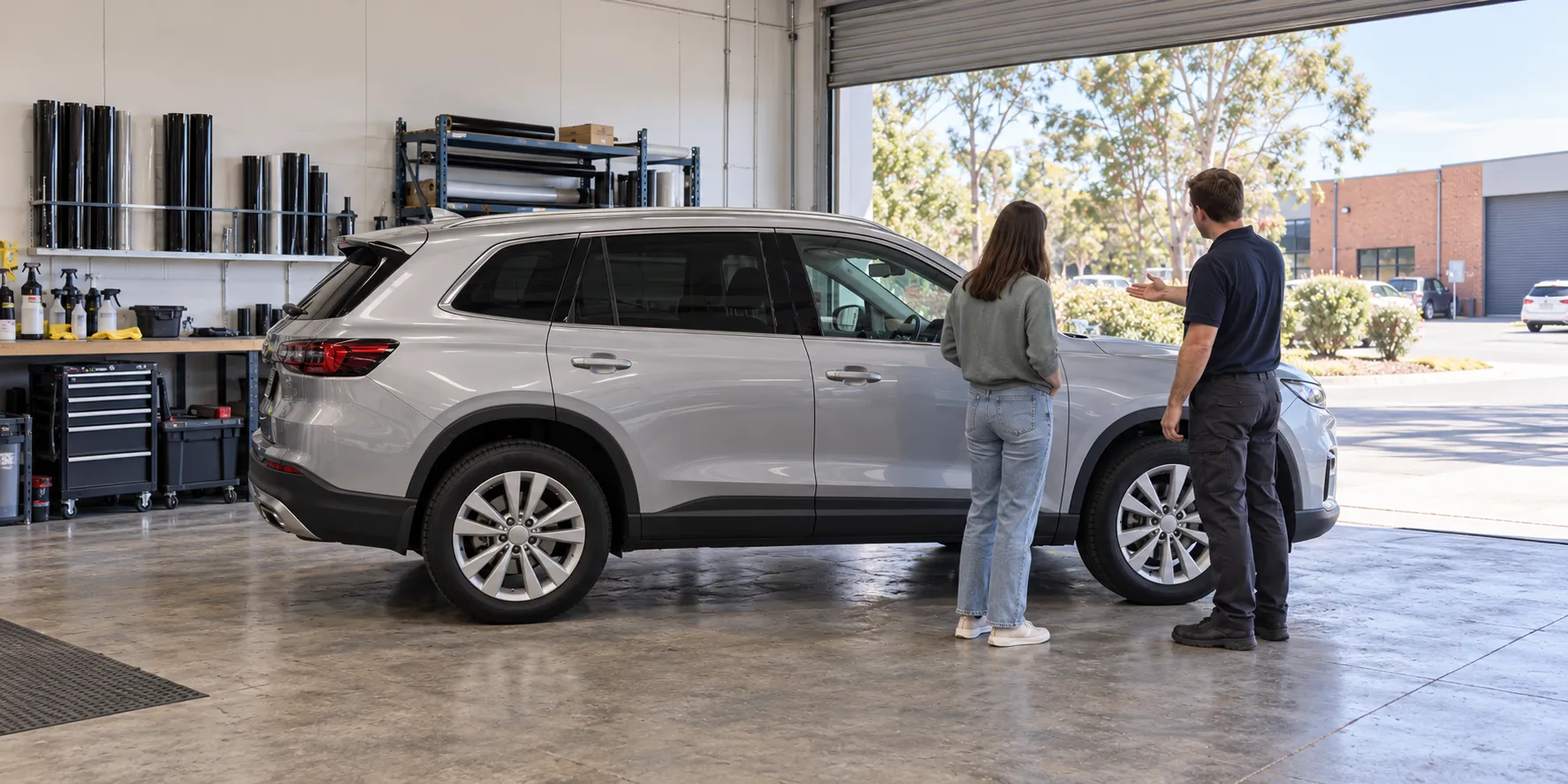
The right recommendation should relate directly to the driver's priorities. If the rear windows already provide sufficient privacy, making them darker may offer little additional benefit. If solar comfort is the main concern, a suitable film may improve performance without requiring unnecessary darkening.
Not every window needs to be treated simply to achieve a uniform appearance. It may be appropriate to leave factory-darkened rear windows unchanged while considering a different solution for other windows, provided the proposed work meets applicable requirements.
Before booking, ask the provider to confirm three things:
The quote should also state whether the existing film will remain in place or needs removal and identify any limitations that could affect the expected result. This makes it easier to compare providers based on the scope and reasoning behind their recommendations rather than price or darkness alone.
Factory privacy glass and aftermarket window film can look similar, but their performance and suitability for further treatment may differ. Prime Tinting can check the existing windows and discuss options based on privacy, solar comfort and the vehicle's requirements. A professional assessment provides a practical starting point for deciding whether additional film is worth it and which treatment best suits the car.
Prime Window Tinting is a family owned and operated local business in Canberra, ACT. We're driven to deliver excellence in the tinting of your car, home or office.
