
SERVICE AREA
All Of Canberra

0431 262 273

Knowing how long car window tinting takes can make it easier to plan around work, family commitments and everyday driving. The time required can vary on the vehicle, number of windows, type of film and condition of the existing glass. For motorists considering car tinting in Canberra, having a realistic timeframe can help with arranging drop-off, collection and the days following installation.
Prime Tinting provides professional window tinting services for drivers wanting to improve privacy, reduce heat and enhance comfort inside their vehicles. The tinting process involves more than simply applying film, with glass preparation, precise fitting, heat-shrinking and final checks all contributing to the appointment length.
Most installations take only a few hours, but the tint itself can take several days to fully cure. Knowing the difference between installation time and curing time, as well as what can cause delays, gives vehicle owners a clearer idea of what to expect before booking.
A standard full-car appointment usually takes around 2 to 3 hours, with the professional installation process including glass preparation, film cutting, positioning, heat-shrinking and final checks. Smaller jobs, such as tinting only the two front windows, may take around 45 to 90 minutes, depending on the vehicle and condition of the glass.
Larger SUVs, people movers and vehicles with additional or complex windows can take closer to 3 to 4 hours. Old tint that needs to be removed or glass requiring additional preparation can also extend the appointment. The installer can assess the vehicle and confirm which windows are being tinted to provide a more accurate timeframe.
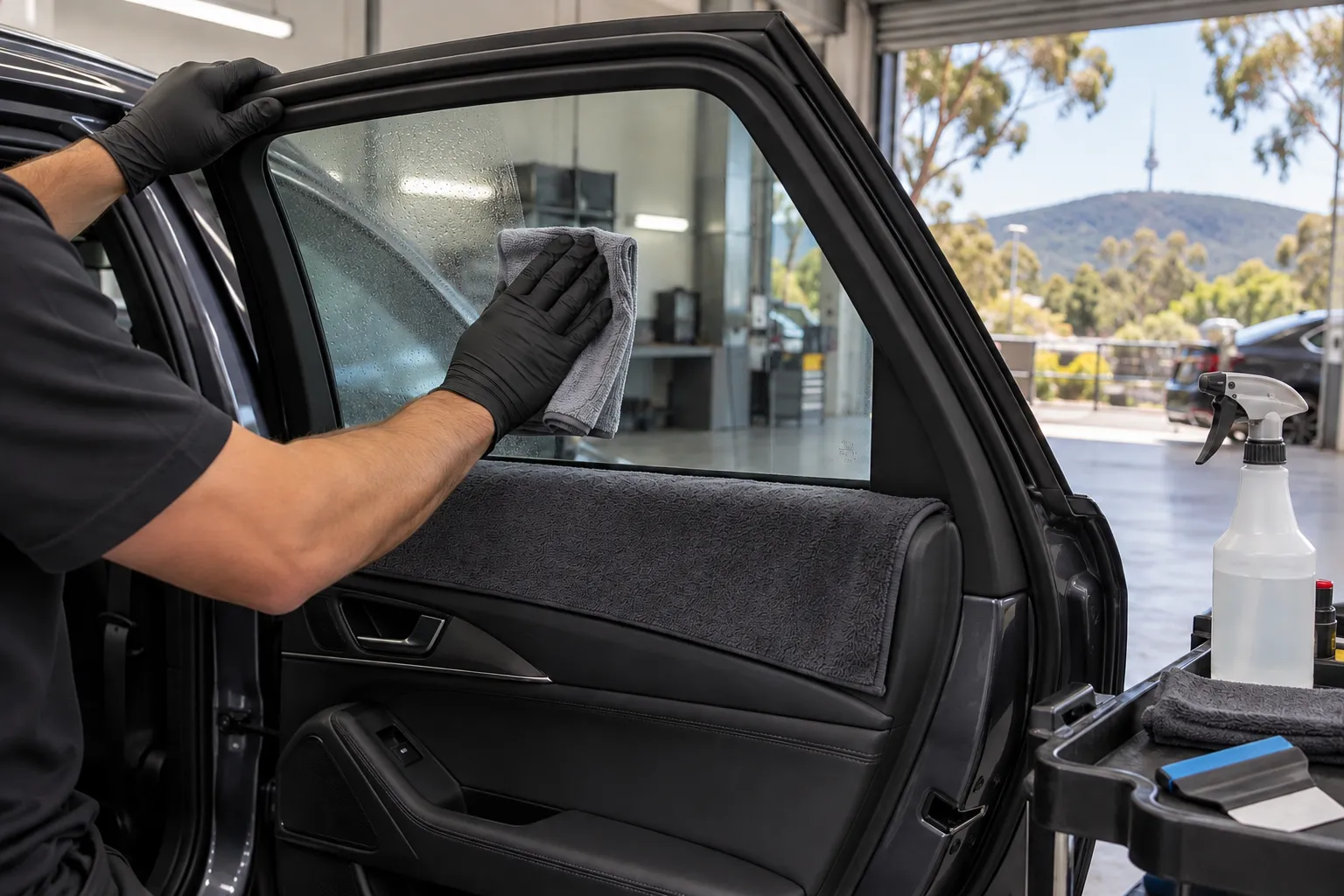
The basic installation may only take a few hours, but individual vehicles can require different amounts of preparation and fitting time. Vehicle size, glass shape, existing tint and the complexity of the job can all affect how long the appointment takes.
The main factors include:
Providing details about the vehicle and existing tint when booking allows enough time to be allocated for the job without rushing the preparation or installation.
Fresh window tint takes around 2 to 4 days to cure under favourable conditions, although the process can take 7 to 10 days in cooler or more humid conditions. During this period, the adhesive continues bonding to the glass while remaining moisture evaporates. Slight haze or small water pockets can be normal while the film settles.
The vehicle can be driven once the installation and final inspection are complete. However, side windows should usually remain closed for at least 48 hours, or for the period recommended by the installer or film manufacturer. The inside of the glass should also be left untouched while the tint is curing.
Once the film has fully cured, normal cleaning can resume using a soft cloth and a suitable ammonia-free glass cleaner. If large bubbles, lifting edges or other obvious defects remain after the expected curing period, the installer should inspect the tint rather than assuming these issues are part of normal curing.
Vehicle owners should also retain their installation documents and confirm what the applicable product warranty covers if bubbling, lifting or discolouration remains after curing.
The type of film can have some effect on installation time, but the difference is less significant than the number and shape of the windows being tinted. Different films may require slightly different handling and heat-shrinking techniques when being fitted to curved glass.
Comparing regular film with ceramic window tint can also help motorists choose the right balance of performance, durability and cost.
Dyed films are straightforward to cut, position and apply. For a standard vehicle with clean glass and no existing tint to remove, installation can usually remain within the typical appointment timeframe.
Carbon films may require careful positioning and heat-shrinking to achieve a smooth finish. The overall difference in installation time is usually modest and depends more heavily on the vehicle and number of windows being covered.
Ceramic films can require precise handling during fitting on larger or deeply curved windows. While this may add some installation time in certain vehicles, ceramic tint does not necessarily take longer to install than other quality films.
Tinting all the windows on a car takes around 2 to 4 hours. A small hatchback or sedan with straightforward glass may take about 2 to 3 hours, while a larger SUV, people mover or vehicle with additional windows can take closer to 3 to 4 hours.
The exact timeframe depends mainly on the number and shape of the windows. Large rear screens, additional quarter windows and deeply curved glass can require more fitting time. If the existing tint is being removed as part of the job, that work should be allowed for separately when planning the appointment.
Yes, removing old window tint can add anywhere from 30 minutes to 2 hours or more to a new tinting appointment. The timeframe depends on how many windows need to be stripped and how easily the existing film and adhesive can be removed. Peeling, bubbling or deteriorated film may take longer to remove than film that lifts away cleanly.
The glass also needs to be thoroughly cleaned after removal so adhesive residue is cleared before the new film is applied. Rear windows require specific care when demister lines are present, which can make removal more time-consuming. Mentioning existing tint when booking allows the installer to include removal and preparation in the estimated appointment time.
Ceramic window tinting takes around 2 to 4 hours for a full vehicle. A smaller sedan or hatchback may take around 2 to 3 hours, while larger vehicles with more windows or deeply curved glass can take closer to 4 hours.
Ceramic film may require careful positioning and heat-shrinking, but the film type alone does not necessarily make the installation significantly longer. Existing tint removal, the number of windows and the shape of the glass are often more important factors when determining the total appointment time.
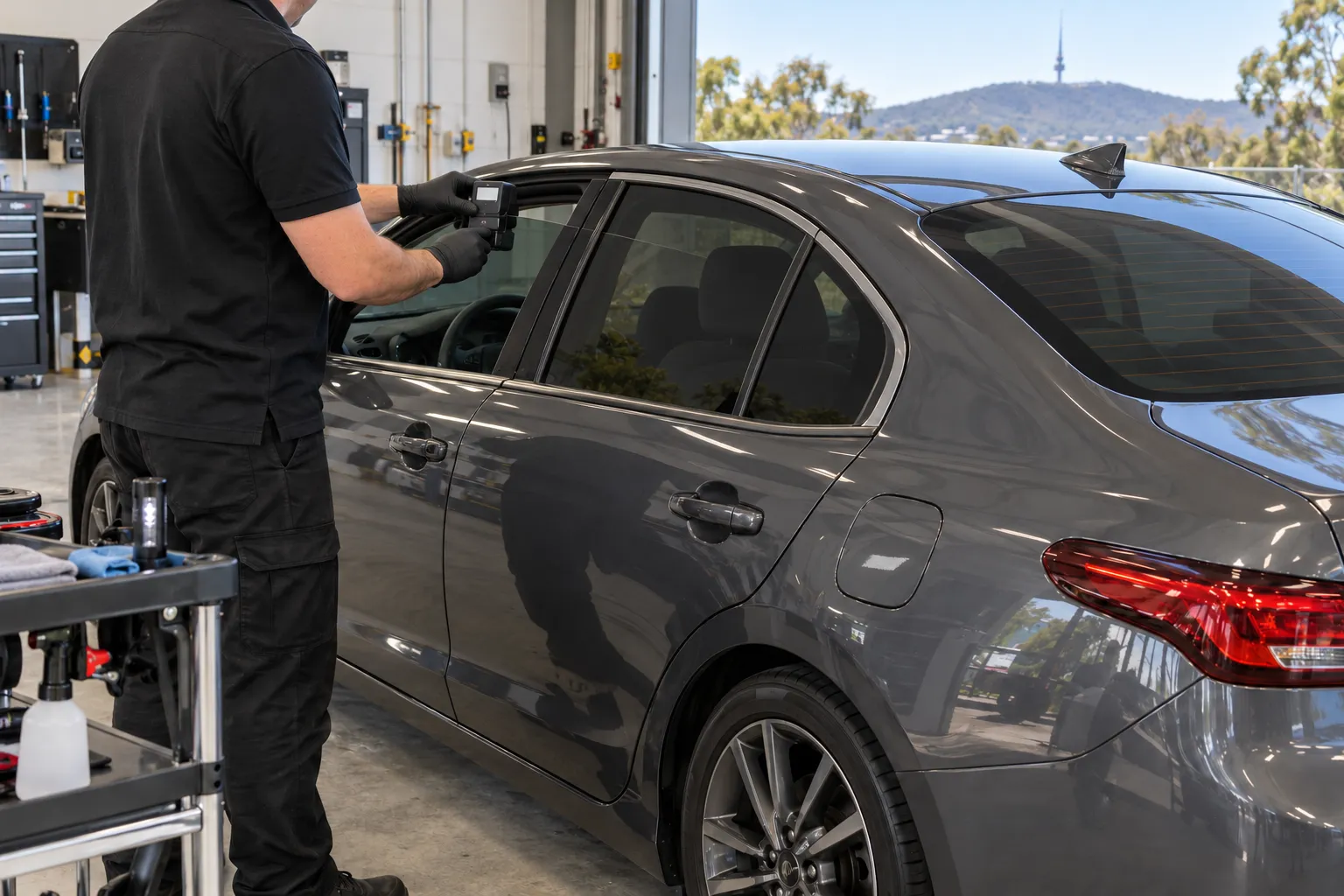
Yes, most standard window tinting jobs can be completed on the same day. A full-car tint takes around 2 to 4 hours, while smaller jobs may take considerably less time. Once installation and final checks are complete, the vehicle can be collected and driven home.
The appointment may take longer if old tint needs to be removed, the glass requires extensive preparation or the vehicle has numerous or complex windows. Booking in advance and confirming the vehicle, selected film and windows to be tinted can help ensure enough time is allocated for the job.
A little preparation before a tinting appointment can help the installation run smoothly and reduce avoidable delays. Making the windows easily accessible, advising the installer about existing tint and confirming the selected film and areas to be tinted can help ensure enough time is allowed for the job.
The vehicle should ideally be cleared of personal belongings around the doors, seats and rear parcel shelf so the installer has easy access to the windows. Loose items, child seats and other objects that restrict access may need to be removed before the vehicle is dropped off.
It is useful to mention any existing window tint, damaged glass or previous tint removal before the appointment. Old film that needs to be stripped can add time to the job, particularly when adhesive remains on the glass. Providing the vehicle model and confirming which windows are being tinted also helps the installer allocate enough time.
The vehicle does not necessarily need to be freshly washed, as the installer will thoroughly clean and prepare the glass as part of the tinting process. However, confirming the selected film, tint shade and windows to be covered before arrival can prevent delays caused by last-minute changes.
However, confirming the selected film, tint shade and windows to be covered before arrival can prevent delays caused by last-minute changes.
A car can be driven shortly after window tinting once the installer has completed the final inspection and confirmed that the film is securely applied. Most full-car tinting jobs can be collected and driven home on the same day, even though the film will still be curing.
The remaining moisture and adhesive setting process do not usually prevent normal driving. Once the installer has checked the film and confirmed that it is properly applied, the vehicle can be driven home without waiting for the tint to fully cure.
The first few days require some care while the tint settles. Side windows should remain closed for at least 48 hours, or for the period recommended by the installer or film manufacturer, to prevent the film from shifting or lifting around the edges. The inside of the glass should also be left untouched and uncleaned during the early curing period.
Local weather conditions can influence how quickly the film becomes fully clear and bonded. Cooler or more humid conditions may leave some haze or small water pockets visible for longer, while favourable conditions can allow the film to settle more quickly. These effects are temporary, but any large bubbles, lifting edges or persistent defects should be checked by the installer.
How long car window tinting takes depends on the vehicle, number of windows, film selected and condition of the existing glass. Most standard installations can be completed within a few hours, while larger vehicles, complex glass or old tint removal may require additional time. The vehicle can usually be driven shortly after installation, although several days may be needed for the tint to fully cure.
Allowing enough time for preparation, installation and curing can help ensure the tint achieves a clean, secure finish without unnecessary delays. Prime Tinting can assess the vehicle and tinting requirements to provide a more accurate timeframe before the appointment, making it easier to plan around drop-off and collection.
Prime Window Tinting is a family owned and operated local business in Canberra, ACT. We're driven to deliver excellence in the tinting of your car, home or office.
